
Signs Your Furnace or Heating System Needs Repair
Because heating gets used so rarely here, problems often stay hidden until the first chilly evening. Long stretches of humid weather and summer storms can also take a toll on components that sit idle. These are the warning signs we hear about most often from homeowners:
- The system runs but blows cool or room-temperature air in heat mode
- A burning or dusty smell that lingers well past the first few minutes of startup
- The breaker trips when you switch to heat
- The heat turns on and off in short cycles or won't shut off at all
- Clicking, buzzing, rattling or squealing from the air handler or furnace cabinet
- Some rooms stay cold while others warm up
- The thermostat is set to heat but nothing happens
- For gas furnaces: a pilot or burner flame that is yellow or flickering, or repeated failed ignition attempts
- Higher electric bills during cool months without a change in how you use the system
What We Check During a Furnace Repair Visit
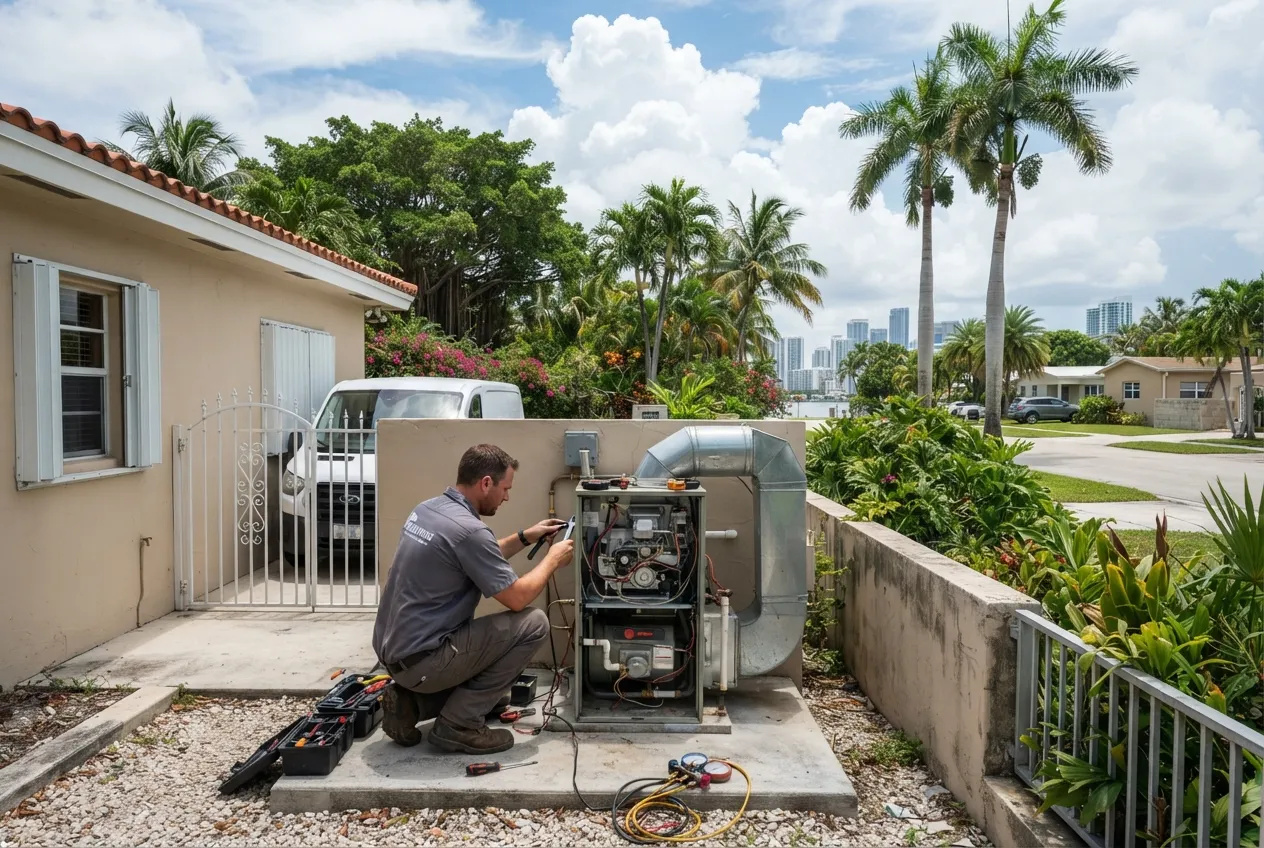
We start with the complaint you describe, then work through the whole heating path so we don't fix one symptom and miss the cause. The exact checks depend on whether you have electric heat strips, a heat pump or a gas furnace.
If anything we find affects safety, such as signs of a gas leak, scorched wiring or a cracked heat exchanger, we'll tell you right away and explain what needs to happen before the system is used again.
- Thermostat settings, wiring and communication with the air handler
- Electric heat strips, sequencers, limit switches and relays
- Breakers, fuses, disconnects and wire connections for heat or scorch marks
- Blower motor, capacitor and fan operation
- Heat pump reversing valve and defrost controls, where applicable
- Gas furnaces: igniter, flame sensor, burners, gas valve, venting and heat exchanger condition
- Air filter, return airflow and visible duct connections
- Condensate drain and any signs of moisture or corrosion in the cabinet
Repair or Replace: How We Help You Decide
Many heating problems come down to one worn part, like a failed heat strip element, a bad sequencer, a weak capacitor or a dirty flame sensor. Those are usually straightforward repairs, and a well-maintained system can keep working for a long time after them.
Replacement starts to make more sense when the equipment is old, when a major component like a heat exchanger or compressor has failed, when parts are hard to find, or when the same system keeps needing repairs. In Miami Beach, heating is usually tied to your air conditioning, so we look at the whole system, not just the heat side. If your AC is also near the end of its life, replacing both together can be more practical than repairing one now and the other later.
If you do replace, switching to a high-efficiency heat pump is worth considering, since it handles both cooling and heating. Florida Power & Light runs a residential program that offers rebates on qualifying high-efficiency central air conditioners and heat pumps through participating contractors at installation. We confirm the current terms before including anything in a quote. Note that the federal Energy Efficient Home Improvement Credit for heat pumps applied to equipment placed in service before December 31, 2025, so it is not available for new installations now.
We'll lay out both options side by side and let you make the call. We won't push a replacement when a repair will do the job.
What Affects the Cost of Furnace Repair
We can't quote a repair until we know what's wrong, but these are the main factors that shape the price you'll see:
- The type of system: electric heat strips, heat pump or gas furnace
- Which part has failed and whether it's a common or specialty part
- The age and brand of your equipment and how easy parts are to get
- How hard it is to reach the unit, such as a tight closet, attic or high-rise mechanical room
- Whether more than one problem is found during diagnosis
- Timing, including after-hours or weekend service if you need it
- Whether related work is needed, like electrical fixes or duct repairs
How a Furnace Repair Visit Works
When you contact us, we'll ask a few questions about your system and what it's doing so the technician arrives prepared. We serve Miami Beach and nearby cities, and we'll give you an arrival window when you book.
On site, the technician talks with you about the problem, then inspects and tests the system. Once we know the cause, we explain it in plain language, show you what we found when possible, and give you a written quote for the repair. No work begins until you approve it.
Many common parts are carried on the service vehicle, so a lot of repairs can be finished during the first visit. If a part has to be ordered, we'll tell you how long it should take and what you can safely run in the meantime. After the repair, we test the system in heat mode and cooling mode to confirm everything is working, then walk you through anything you should keep an eye on.