
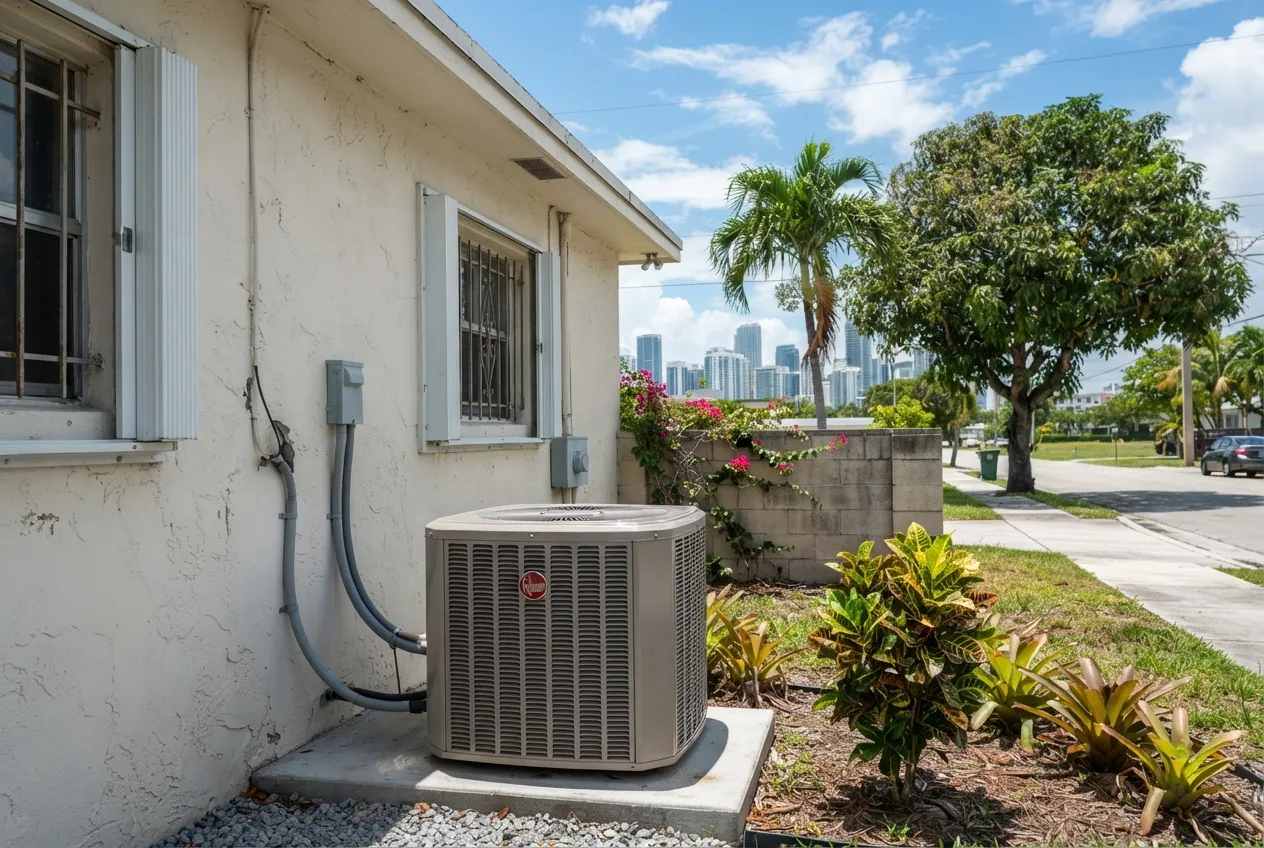
Signs It's Time for a New AC System
Most air conditioners give some warning before they fail for good. In Miami Beach, the wet season runs from May through October and the system rarely gets a long rest, so those warnings tend to pile up faster than in milder parts of the country.
One sign on its own doesn't always mean replacement. Several together usually mean it's time to have the system evaluated.
- The system runs nearly nonstop, but the house never reaches the set temperature.
- Rooms feel cool but clammy, or you notice musty smells or condensation around vents.
- Repairs have become routine, and the same parts keep failing.
- Your power bills keep rising even though your habits haven't changed.
- The outdoor unit shows heavy corrosion from salt air, or the cabinet and coil are visibly deteriorating.
- The system uses an older refrigerant that is getting harder and more expensive to service.
- You're renovating or adding space, or the current unit was undersized from the start.
What We Check Before Recommending a New System
A good installation starts with an honest look at the whole system, not just the unit outside. Before we recommend equipment, we check the following:
We'll walk you through what we find, including problems that a new unit alone won't fix.
- The size of your home, ceiling heights, sun exposure through windows, and insulation. This lets us match the new unit to the actual cooling load instead of guessing from square footage alone.
- The ductwork, including leaks, crushed or disconnected runs, and poor insulation in the attic. We also check whether the duct sizes fit the airflow a new system needs.
- The condensate drain line and pan, since a clogged drain is a common cause of water damage during humid months.
- The electrical service, breaker sizing, and wiring to both the indoor and outdoor units.
- The outdoor unit's location, pad, and mounting, including exposure to salt spray, standing water, and storm debris.
- The thermostat and controls, and whether they will work with new equipment.
Repair or Replace: Your Options
Not every struggling AC needs to be replaced. A repair is usually the sensible choice when the system is relatively young and the coils and compressor are in good shape. It also makes sense when the problem is a single failed part, such as a capacitor, fan motor, or contactor.
Replacement starts to make more sense in a few situations: the compressor or coil has failed on an older system, refrigerant leaks keep coming back, or you're paying for repairs every season. At that point, money spent on repairs often goes into equipment that is near the end of its life anyway.
There is also a middle path. Sometimes it's possible to replace only the indoor or outdoor portion, though matched systems usually perform better and last longer. In other cases, repairing ductwork or improving humidity control solves comfort problems without a full replacement. We'll lay out each realistic option, what it fixes, and what it doesn't, so you can decide.
What Affects the Cost of AC Installation
We don't quote installation prices without seeing the home, because the final cost depends on details that vary from house to house. The main factors are:
Florida Power & Light offers rebates on qualifying high-efficiency central air conditioners and heat pumps. These rebates are delivered through participating contractors at the time of installation. Program terms can change, so we confirm the current details before including them in a quote. The federal tax credit for qualifying heat pumps covered only systems placed in service before December 31, 2025. It is not available for new installations.
- System type: central split system, heat pump, ductless mini-split, or packaged unit.
- Capacity and efficiency rating. Higher-efficiency equipment costs more up front but uses less electricity over its life.
- Features such as variable-speed compressors and blowers, which help control humidity.
- The condition of existing ductwork and whether it needs repair, sealing, or replacement.
- Electrical upgrades, new pads, or stands that raise equipment above flood-prone ground.
- Access, such as attic, closet, rooftop, or condo installations with limited space or building rules.
- Permits and inspections required by your local building department.
- Whether your system qualifies for available utility rebates.
How an Installation Visit Works
Here's what to expect from the first visit to the finished job.
Timing matters too. The milder, drier months from November through April are usually the easiest time to replace a system, because you avoid going without cooling during the hottest, most humid stretch of the year.
- Assessment: A technician inspects your current system, ductwork, electrical, and home layout. They also ask about hot rooms, humidity, and other comfort problems.
- Options: We explain the equipment choices that fit your home and budget, in writing, with the tradeoffs spelled out.
- Scheduling and permits: We arrange any required permits and set an installation date. During hurricane season, which runs from June 1 to November 30, we also plan around storm forecasts.
- Installation: We protect floors and work areas and remove the old equipment. Then we set and secure the new units, connect the refrigerant lines, electrical, and condensate drain, and complete any agreed duct repairs.
- Startup and testing: We check refrigerant charge, airflow, temperature drop, drain operation, and thermostat settings.
- Walkthrough: We show you how to use the thermostat and change the filter, and we explain the routine maintenance your system needs.