
Signs a Ductless Mini-Split May Be Right for Your Home
In Miami Beach, air conditioning runs for most of the year. From May through October the wet season brings high humidity and frequent afternoon thunderstorms, and even the drier months from November through April have plenty of warm days. A room that can't keep up gets noticed quickly.
These situations often point toward a ductless system:
- One room, often a sunroom, west-facing bedroom, or top-floor space, stays noticeably warmer or stickier than the rest of the house.
- You added a room, enclosed a porch, or converted a garage, and the existing central system wasn't sized to cover it.
- Your home or condo has no ductwork, or the ducts are too small, damaged, or hard to reach.
- You rely on window units that are noisy, block light, or leave gaps around the frame.
- You want to cool rooms on separate schedules instead of running the whole house to keep one space comfortable.
- An older mini-split is struggling to cool, cycling constantly, leaking water indoors, or needing repeated repairs.
What We Check Before Recommending a System
A mini-split that's too large will cool the room quickly but shut off before it removes enough moisture, leaving the space clammy. One that's too small will run nonstop on hot afternoons. Getting the size and placement right matters more than the brand name on the unit.
Before we recommend equipment, we look at:
- The square footage, ceiling height, and layout of each room you want to condition.
- Window size and direction, sun exposure, insulation, and how much heat the room picks up from appliances or people.
- Where the indoor head can mount so air reaches the whole room without blowing directly on a bed or couch.
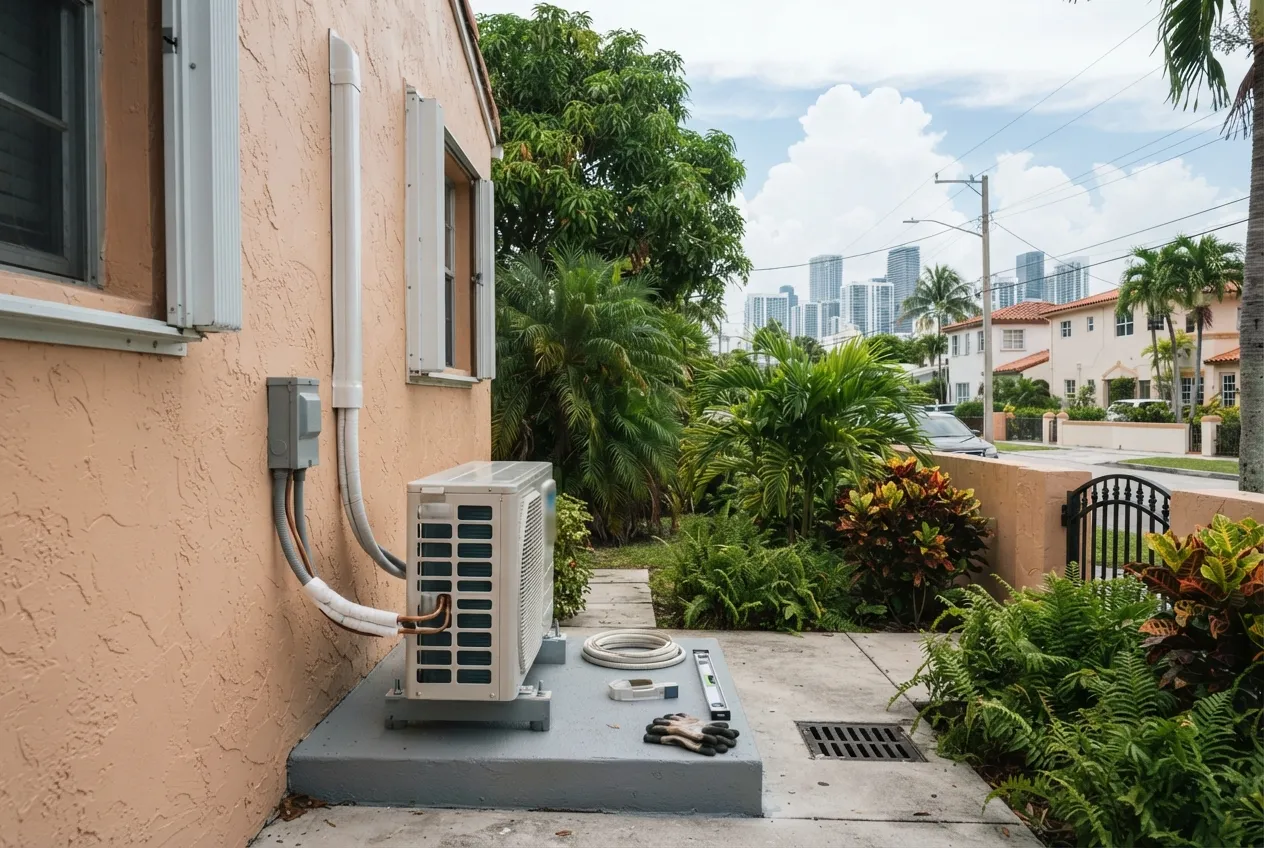
- The exterior wall construction and the path for the line set and condensate drain.
- A suitable outdoor location that's level, has airflow clearance, and can be secured against high wind.
- Your electrical panel's available capacity and whether a new circuit is needed.
- For condos, any building or association rules about outdoor units, wall penetrations, and where equipment can go.
Repair, Replace, or Add: Your Options
If you already have a mini-split, installing a new one isn't always the answer. Many problems, such as a clogged condensate line, dirty indoor coil, failed fan motor, sensor issue, or refrigerant leak, can be repaired. We'll diagnose the system first and tell you what we found.
Replacement starts to make more sense when the system is older and needs a major component like the compressor, when repairs keep coming back, when parts are hard to find, or when the unit simply can't keep a room comfortable during the wet season. In some cases the existing line set can be reused; in others it should be replaced. We'll explain which applies and why.
If you're adding comfort to new space, you can choose a single-zone system with one indoor unit, or a multi-zone system where one outdoor unit serves several indoor heads. Indoor units also come in different styles, including wall-mounted, ceiling cassette, and slim ducted models that hide in a soffit.
What Affects the Cost of Installation
Every installation is quoted after we see the home, because several factors change the scope of the work:
- The number of zones and indoor units, and the capacity of each.
- The efficiency rating of the equipment you choose.
- The style of indoor unit, since ceiling cassettes and concealed ducted units take more labor than wall-mounted heads.
- The length and route of the line set, and whether it needs a covered channel along the exterior wall.
- Electrical work, such as a new dedicated circuit or a panel upgrade.
- The outdoor unit mounting method, such as a ground pad, wall bracket, or roof stand, and the tie-downs needed for wind.
- Wall material, access, and any condo or permit requirements.
Rebates and Tax Credits to Know About
Florida Power & Light runs a Residential HVAC program that offers rebates on qualifying high-efficiency central air conditioners and heat pumps. Rebates are handled through participating contractors at the time of installation. Program terms change, so we confirm the current requirements before including any rebate in a quote, and we'll tell you whether the specific system you're considering qualifies.
The federal Energy Efficient Home Improvement Credit covered qualifying heat pumps placed in service before December 31, 2025. It is not available for new installations after that date, so plan your budget without it.
How an Installation Visit Works
Most installations follow the same steps, and we'll tell you up front if your project needs anything different.
First, a technician visits to assess the rooms, take measurements, and talk through where you want the indoor units and how you use the space. You'll get a written recommendation with equipment options and a quote.
On installation day, we protect floors and furniture, mount the indoor unit, drill the wall opening, and run the refrigerant lines, wiring, and condensate drain. Outside, we set and secure the condenser, connect the electrical service, and seal the wall penetration against rain. We then pressure-test the lines, pull a vacuum to remove moisture and air, release the refrigerant, and start the system.
Before we leave, we check airflow, temperature drop, and drainage, clean up the work area, and show you how to use the remote, set schedules, and clean the indoor filters. Hurricane season runs from June 1 to November 30, so we'll also point out how the outdoor unit is anchored and what to check after a storm.