
Signs Your Ducts May Need Cleaning
Ducts don't need cleaning on a fixed schedule. They need it when something has gotten into them that your filter can't handle. Because air conditioning runs for most of the year here, problems inside the ducts get pushed into your living space nearly every day.
Watch for these signs, especially after the wet season from May through October, when indoor humidity tends to run higher:
- Dust or gray debris blowing out of supply vents when the system starts
- Furniture and floors getting dusty again soon after you clean
- A musty or damp smell when the AC turns on
- Visible dark spots or growth on vent covers or inside the openings
- Recent remodeling, drywall work, or flooring sanding while the system was running
- Signs of insects or rodents in the attic, ceiling, or air handler closet
- Water intrusion, roof leaks, or storm damage near ductwork
- Some rooms getting noticeably less airflow than others
What We Check During a Duct Inspection
Cleaning dirty ducts without finding out why they got dirty usually means the problem comes back. Our inspection looks at the full system, from the return grille to the last supply register.
We use visual checks and, where access allows, a camera to see inside duct runs. We also look at the parts of the system that affect how clean your ducts stay.
- Return grilles and the filter: fit, size, and whether air is bypassing the filter
- Air handler cabinet, blower wheel, and evaporator coil for dust buildup or growth
- Drain pan and condensate line, since standing water near the air handler can feed mold
- Supply and return ducts for debris, moisture, crushed sections, and disconnected joints
- Duct insulation and outer jacket, especially in hot attics where condensation can form
- Registers and boots where ducts meet the ceiling or wall
Clean, Repair, or Replace: Your Options
Most homes fall into one of three situations, and we'll explain which one applies to yours before any work begins.
Cleaning alone fits when the ducts are in good physical shape but contain dust, debris, or light buildup. We use negative-pressure equipment and agitation tools to loosen and pull material out of the system, then clean the registers and grilles. If the blower or coil is dirty, cleaning them at the same time keeps freshly cleaned ducts from getting recontaminated.
Repair fits when the ducts are mostly sound but have specific problems: a disconnected run, a torn section of flexible duct, leaky joints, or damaged insulation in one area. Sealing leaks and replacing short sections can restore airflow and help keep attic air, dust, and humidity out of the system.
Replacement makes sense when ductwork is widely damaged, crushed, sagging, deteriorated, or has growth soaked into the insulation that cleaning can't remove. Flexible duct and fiberglass-lined duct are hard to clean once mold has taken hold in the material. If you're also replacing your air conditioner or heat pump, it's a good time to evaluate the ducts, since a new system performs best on ducts sized and sealed correctly. Florida Power & Light offers rebates on qualifying high-efficiency central air conditioners and heat pumps through participating contractors at installation, and we confirm the current terms before discussing them with you.
What Affects the Cost
We give you a clear quote after the inspection, because every home's duct system is different. The main factors are:
- Size of the home and the number of supply and return vents
- How many HVAC systems and air handlers the home has
- Duct type: sheet metal, duct board, or flexible duct
- How easy the ducts are to reach, such as attic space, dropped ceilings, or condo chases
- How much debris or growth is present and whether the coil and blower need cleaning too
- Whether repairs, sealing, or section replacement are needed
- Building rules in condos or high-rises that affect access or work hours
How a Duct Cleaning Visit Works
When you call, we'll ask about the home, the number of systems, and what you're noticing, so the technician arrives prepared. If you live in a condo, let us know about any building access or scheduling requirements.
On arrival, the technician inspects the system and shows you what they find, including camera images when available. You'll get an explanation of the options and a quote before work starts. Nothing is cleaned, repaired, or replaced without your approval.
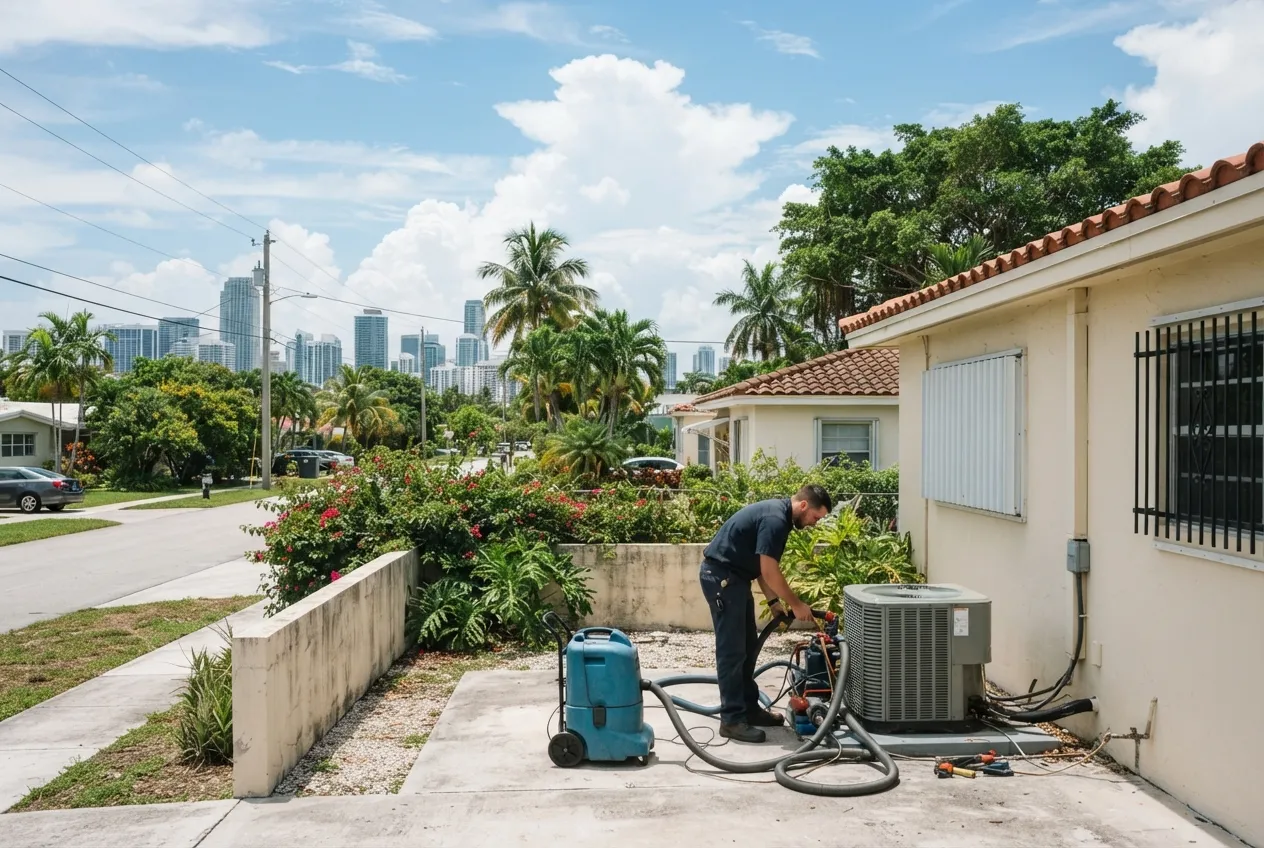
During cleaning, we protect floors and furniture near work areas, cover registers, connect the vacuum equipment, and work through the duct runs section by section. Afterward, we install a correctly sized filter, restart the system, check airflow at the registers, and walk you through what was done. We'll also point out anything that could cause buildup to return, like a poorly fitting filter or a slow-draining condensate line.