
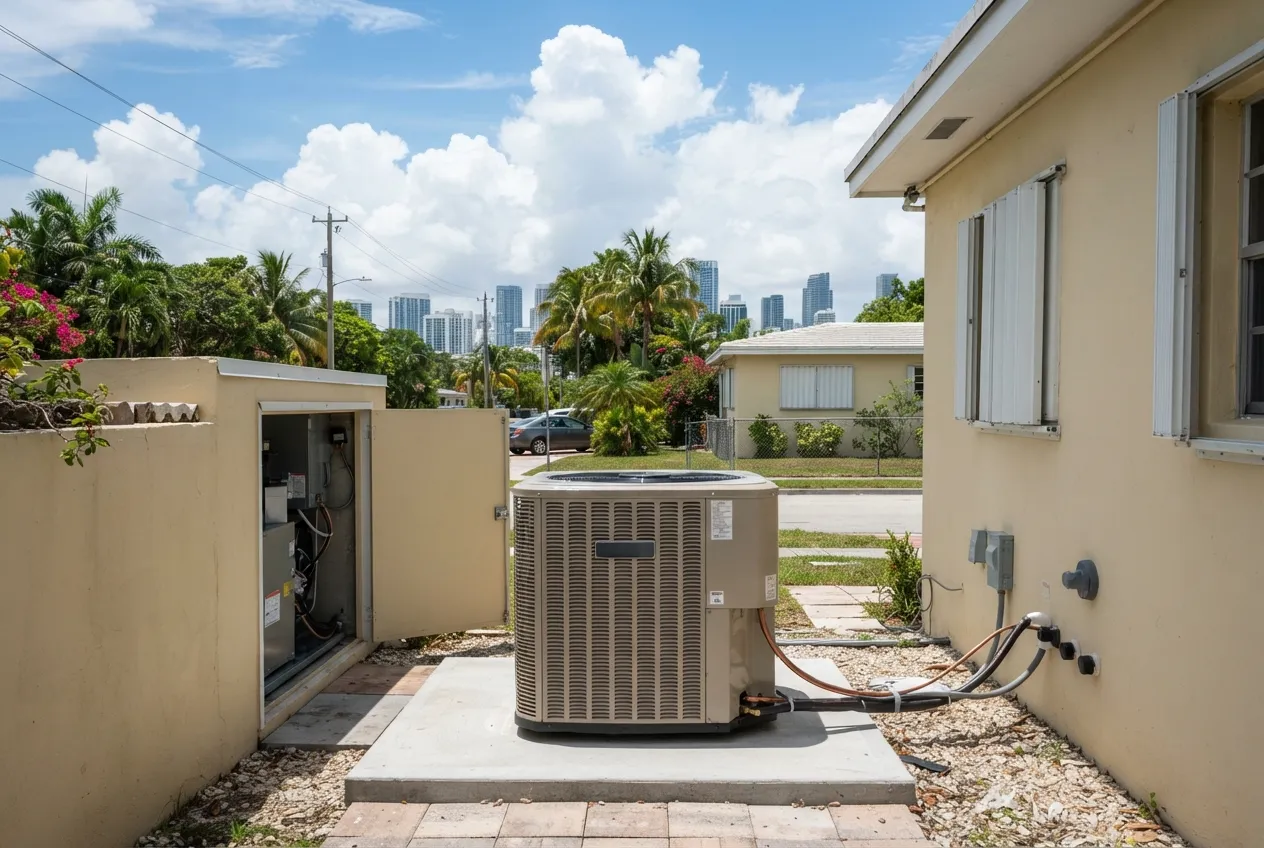
Signs Your System Is Due for Maintenance
Many homeowners book maintenance on a routine schedule. Your system will also often tell you when a visit is overdue. Watch for these signs:
Water around the indoor unit deserves quick attention. In our humid climate, the air handler pulls a lot of moisture out of the air. A clogged condensate line can overflow into ceilings, closets or flooring, and that damage is usually far more disruptive than the cleaning that would have prevented it.
- Rooms feel warmer or stickier than they used to, even with the thermostat set low
- The system runs almost constantly or turns on and off in short bursts
- Weak airflow from the vents
- Water pooling near the air handler or a wet drain pan
- A musty smell when the system starts
- New noises such as buzzing, rattling, grinding or squealing
- Ice on the refrigerant lines or the indoor coil
- Electric bills climbing without a change in how you use the AC
What We Check During a Maintenance Visit
A maintenance visit is a hands-on inspection and cleaning of both the indoor and outdoor equipment. Our technician works through a consistent checklist so nothing important gets skipped:
If we find a part that is worn but still working, we tell you what we saw and how urgent it is. You decide whether to address it now or keep an eye on it.
- Thermostat settings, calibration and operation
- Air filter condition, with a replacement if you have one on hand or request one
- Indoor evaporator coil and blower for dirt buildup
- Outdoor condenser coil, cleared of debris and rinsed as needed
- Condensate drain line and pan, flushed and checked for proper flow
- Refrigerant pressures and temperature readings to spot leaks or charge problems
- Capacitors, contactors and wiring for wear, heat damage or corrosion
- Motor and fan operation, including belts and bearings where applicable
- Supply and return temperature difference to confirm the system is cooling properly
- Visible ductwork and connections for gaps or loose sections
- Heat pump reversing valve and heating mode, if your system has one
- Outdoor unit level, clearance and mounting
Timing Maintenance Around Miami Beach Weather
Miami Beach has a wet season from May through October, with frequent afternoon thunderstorms, and a sunnier, less humid stretch from November through April. Air conditioning runs for most of the year, so there is no long off-season when your system gets a break.
Many homeowners schedule maintenance during the drier months, before the heaviest cooling demand returns. The Atlantic hurricane season runs from June 1 to November 30, so a checkup before or after it makes sense. Storms can push debris into the outdoor unit, shift its position or disrupt power. After a major storm, it's worth having the system looked over before you rely on it fully.
Repair or Replace: Your Options
Most maintenance visits end with a clean bill of health or a short list of minor fixes. Sometimes, though, we find a larger problem, and you'll have a choice to make. A repair usually makes sense when the system is in otherwise good condition and the failed part is isolated, such as a capacitor, fan motor or drain issue.
Replacement is worth discussing when the equipment is older, needs repeated repairs, has a major component failure such as the compressor, or struggles to keep up with your home's cooling needs. Salt air near the coast can also wear down outdoor units over time, and corrosion is one factor we look at. We'll explain what we found and lay out your options without pressure.
If you replace your system, Florida Power & Light runs a Residential HVAC program. It offers rebates on qualifying high-efficiency central air conditioners and heat pumps, delivered through participating contractors at the time of installation. We confirm the current program terms before including them in any quote. Note that the federal Energy Efficient Home Improvement Credit for heat pumps covered only systems placed in service before December 31, 2025. It does not apply to new installations after that date.
What Affects the Cost of Maintenance
Maintenance cost depends on your specific equipment and its condition. The main factors include:
We explain any additional work and get your approval before we do it.
- The type of system, such as a central split system, heat pump or package unit
- How many systems or zones your home has
- How long it has been since the last service and how much cleaning is needed
- Access to the equipment, such as an air handler in a tight closet or attic, or a rooftop unit
- Parts or materials needed beyond the standard inspection, such as filters, refrigerant or electrical components
- Whether repairs are approved during the same visit
How a Maintenance Visit Works
First, you schedule a time that works for you. When the technician arrives, they'll ask about anything you've noticed, such as noises, warm rooms or water near the unit, so they can pay extra attention to those areas.
Next comes the inspection and cleaning described above, covering both the indoor and outdoor equipment. Please make sure the technician can reach the air handler, the thermostat and the outdoor unit. Moving stored items away from the air handler closet ahead of time helps the visit go smoothly.
When the work is finished, the technician walks you through what they found, what they cleaned or adjusted, and any recommended repairs in order of priority. If everything looks good, you'll know your system is ready for the months ahead. If something needs attention, you'll have the information you need to decide on next steps.