
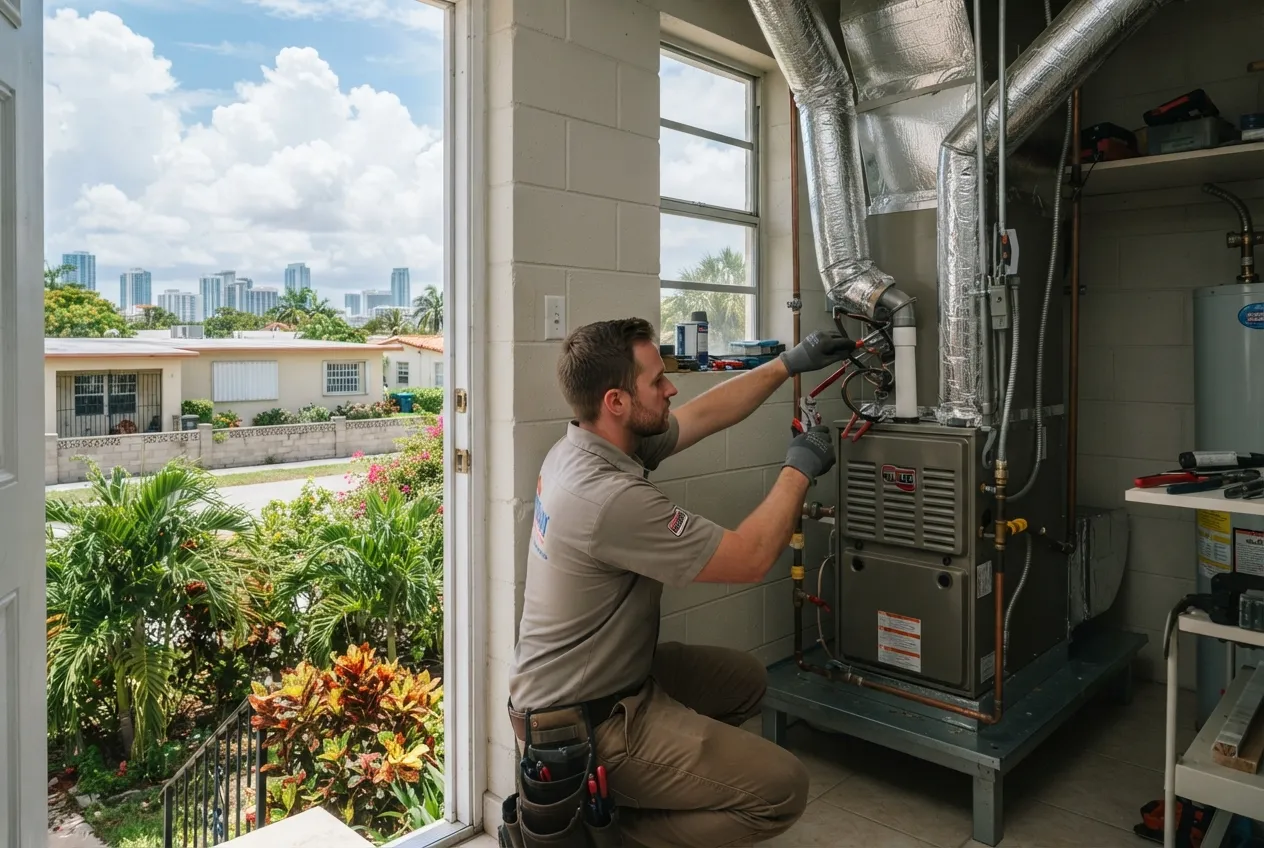
Signs You Need a New Furnace or Heat Source
Because heating runs so rarely in Miami Beach, problems often show up on the first chilly night of the season. A system that seemed fine last winter can fail after sitting unused through a long, humid summer. Watch for these signs:
If you smell gas, leave the home right away and contact your gas utility from outside before you call us.
- A burning or dusty smell that doesn't fade after the first few minutes of running
- Heat strips that trip the breaker or never warm the air
- A gas furnace that won't light, turns on and off quickly, or has a yellow, flickering flame instead of a steady blue one
- Rust or corrosion on the cabinet, burners, or electrical connections, which is common in salty, humid coastal air
- A new air conditioner going in that no longer matches the old heating section
- Repair parts that are hard to find for an older unit
What We Check Before Recommending Installation
Before we suggest replacing anything, a technician looks at the whole system, not just the heating part. Heating and cooling share the same air handler, ducts, and thermostat, so a problem in one area often affects the other.
We write down what we find and show you. That way you can see why we're recommending a repair or a replacement.
- Heat strip elements, sequencers, relays, and wiring for wear or overheating
- Breaker and wire size, so new heating equipment matches your electrical panel
- Gas furnace burners, flame sensor, igniter, heat exchanger, and venting
- Carbon monoxide risk on any gas appliance
- Air handler condition, blower motor, and drain pan. Moisture and rust are constant problems during the wet season
- Ductwork and airflow, which affect how evenly heating and cooling reach each room
- Thermostat settings and compatibility with new equipment
Repair or Replace: Your Options
A failed heat strip, relay, or igniter is often a simple repair. If the rest of the system is in good shape, fixing the part usually makes sense, especially when you only use heat a few weeks a year.
Replacement starts to make sense when the air handler is badly corroded, a gas furnace has a cracked heat exchanger, or you're already replacing the air conditioner. Installing heating and cooling together keeps the parts matched and saves you a second visit later.
Many Miami Beach homeowners also consider switching to a heat pump. A heat pump cools all summer and heats efficiently on cool mornings. It often uses less electricity than resistance heat strips. Florida Power & Light offers rebates on qualifying high-efficiency heat pumps and central air conditioners through participating contractors at the time of installation. We confirm the current terms before including them in a quote.
The federal Energy Efficient Home Improvement Credit (25C) covered qualifying heat pumps placed in service before December 31, 2025. It isn't available for new installations now, so we don't count it when comparing options.
What Affects the Cost of Furnace Installation
Every home is different, so we give you a quote after we've seen your system. The main factors are:
Utility rebates can lower the cost of qualifying heat pump systems. We'll tell you up front whether the equipment you're considering qualifies.
- Type of equipment: heat strip, gas furnace, or heat pump
- The size and capacity your home's square footage and layout require
- Efficiency level of the new equipment
- Whether the air conditioner is being replaced at the same time
- Electrical upgrades, such as a new breaker or wiring
- Gas line, venting, or flue changes for gas furnaces
- Duct repairs or changes
- Access, such as a tight closet, attic, or condo mechanical room with building rules
- Permits and inspections the city requires
How an Installation Visit Works
Late fall and winter are good times to plan heating work. The busiest cooling months are over, and hurricane season ends November 30. During storm season, from June through November, weather can delay equipment deliveries and push back appointments, so planning ahead helps.
Here is what to expect:
In condos and multi-unit buildings, we coordinate with building management on access, elevator use, and work hours when needed. If your building requires paperwork before work begins, let us know when you schedule so we can plan for it.
- Assessment: we inspect the current system, take measurements, and talk through your options
- Written quote: the equipment, scope of work, and any permits explained in plain language
- Installation day: we protect your floors, remove the old unit, install and connect the new equipment, and seal all connections
- Testing: we run heating and cooling and check airflow, temperature rise, and electrical draw. For gas equipment, we also check combustion and venting
- Walkthrough: we show you how to use the thermostat and change filters, and we haul away the old equipment