
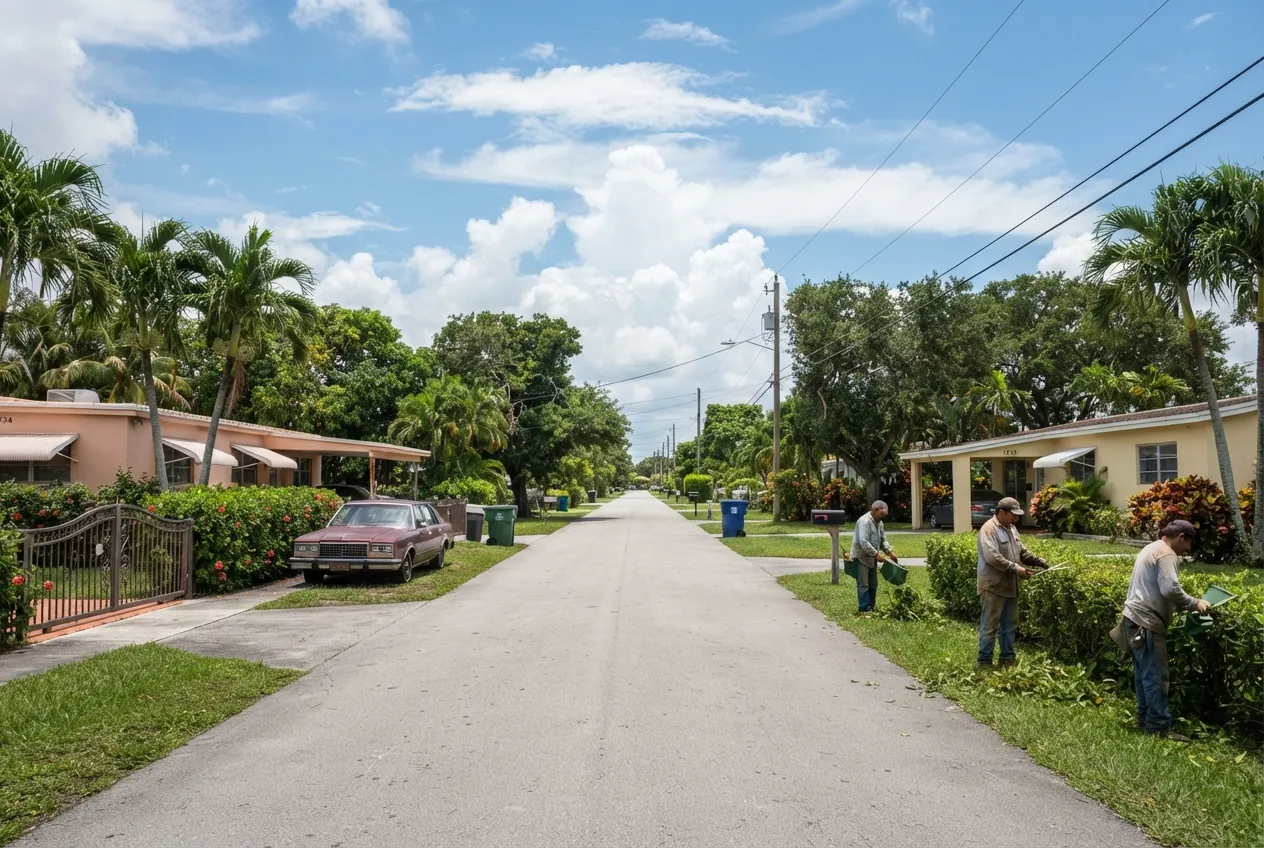
Why a Heat Pump Fits West Miami Homes
West Miami follows the same climate pattern as Miami Beach. The wet season runs from May through October with frequent afternoon thunderstorms, and November through April is sunnier with lower humidity. Air conditioning runs for most of the year, so the cooling side of any system matters most. A heat pump is an air conditioner that can also run in reverse, so you are not paying for a separate heating system you rarely use.
Because the system runs so many hours, efficiency and humidity control matter more here than heating capacity. A properly sized heat pump removes moisture as it cools, which keeps indoor air from feeling clammy during the wet season. Many air handlers also include backup electric heat strips, which we size for occasional use rather than as the main heat source.
What We Check Before Recommending a System
Many West Miami homes already have central air with ductwork, which often makes a heat pump a direct replacement. Before we recommend a model, we look at the house itself instead of copying the size of the old unit.
Oversizing is a common problem in South Florida. A unit that is too large cools the air quickly and shuts off before it removes enough humidity. Right-sizing lets the system run longer, steadier cycles that keep the house both cool and dry.
- A load calculation based on square footage, insulation, windows, and sun exposure
- Condition of existing ductwork, including leaks, crushed sections, and missing insulation
- Whether the indoor air handler can be reused or should be replaced to match the new outdoor unit
- Electrical service and breaker capacity for the new equipment
- Outdoor unit placement, drainage, and clearance from walls and shrubs
- Condensate drain routing so water from long cooling seasons drains properly
Installation Day and Storm-Season Planning
Most replacements follow the same sequence. We recover refrigerant from the old system, remove the old outdoor and indoor equipment, set the new outdoor unit, install or connect the air handler, run or flush the refrigerant lines, and connect power and the thermostat. Then we pressure-test, evacuate, charge, and start the system, checking airflow and temperatures before we leave.
The Atlantic hurricane season runs from June 1 to November 30, which overlaps with the busiest cooling months. During installation we talk through securing the outdoor unit to its pad or stand, keeping it out of debris paths, and setting it above spots where water collects after heavy rain. If your current system is still working, planning the replacement for the drier months from November through April can mean less disruption.
Rebates and Tax Credits: What Applies Now
Florida Power & Light runs a Residential HVAC program that offers rebates on qualifying high-efficiency central air conditioners and heat pumps. The rebate is delivered through participating contractors at the time of installation. Program terms can change, so we confirm the current details before including any rebate in a quote.
The federal Energy Efficient Home Improvement Credit, known as 25C, covered qualifying heat pumps placed in service before December 31, 2025. It is not available for new installations after that date, so it should not factor into a heat pump purchase made today.
Serving West Miami and Nearby Areas
West Miami is in Miami-Dade County, about 10 miles west of our Miami Beach base. We also install heat pumps in South Miami, Miami Springs, Coral Gables, Miami, and Opa-locka. To get started, contact us to set up an in-home assessment. We will look at your current system and walk you through options that fit your house.
After installation, change or clean filters regularly, keep the outdoor unit clear of leaves and clippings, and schedule routine maintenance so the condensate drain stays clear through the wet season.