
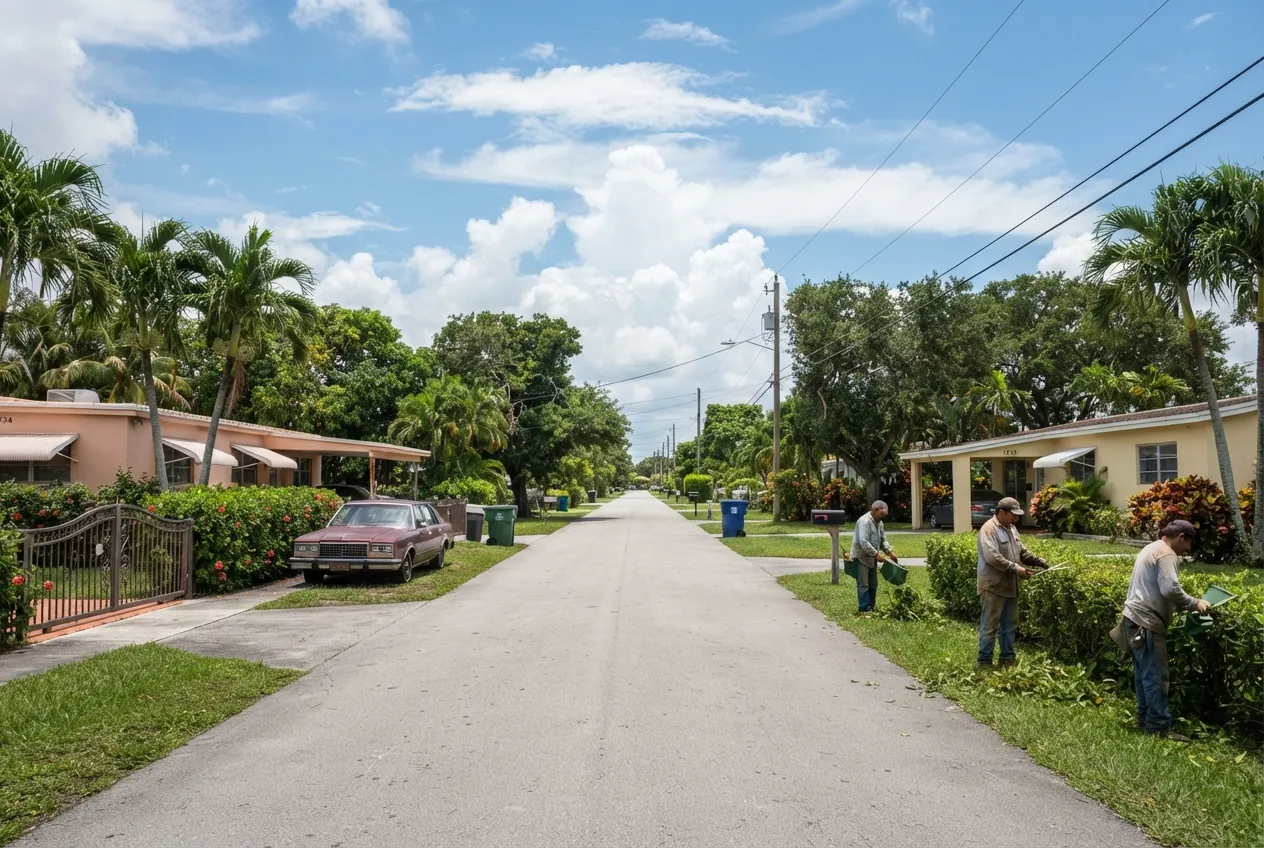
Why AC Systems in West Miami Work So Hard
Miami-Dade has a tropical monsoon climate. From May through October, the wet season brings heat, high humidity, and frequent afternoon thunderstorms. November through April is sunnier and less humid, but it is still warm enough that most homes run air conditioning for most of the year.
That near-constant use is the main reason AC systems here wear out the way they do. A unit that rarely gets a break puts steady stress on its capacitors, contactors, fan motors, and compressor. The system also has to remove a lot of moisture from the air. A clogged drain line or dirty coil that might go unnoticed in a drier place can quickly cause a water leak or a musty, clammy house in West Miami.
Common AC Problems We Repair
Most service calls start with a simple complaint: the house won't cool, the system won't turn on, or water is showing up where it shouldn't. These are the problems we find most often behind those symptoms:
- Failed capacitors that keep the outdoor fan or compressor from starting
- Worn contactors and electrical connections at the outdoor unit
- Clogged condensate drain lines that cause water leaks or trip a safety switch
- Frozen evaporator coils caused by poor airflow or low refrigerant
- Refrigerant leaks in coils, line sets, or fittings
- Blower motor and fan motor failures
- Thermostat wiring or settings problems that look like equipment failure
- Dirty condenser coils that make the system run long without keeping up
What to Check Before You Call
A few quick checks can save you a visit, or at least help us diagnose the problem faster. Make sure the thermostat is set to cool and set below the current room temperature. Check that its batteries aren't dead. Look at your air filter. A badly clogged filter can choke airflow and lead to a frozen coil.
Next, check the breaker panel for a tripped breaker for the air handler or the outdoor unit. If you see ice on the refrigerant lines or the indoor coil, turn the system off and let it thaw before running it again. If water is pooling near the indoor unit, a clogged condensate line is a likely cause. If none of these steps solves the problem, it's time to have a technician take a look.
How We Approach AC Repair
We diagnose before we replace parts. A technician checks electrical components, airflow, refrigerant pressures, drainage, and thermostat operation. That way we find the actual cause, not just the part that failed most recently. A bad capacitor, for example, is sometimes a symptom of a struggling fan motor.
Once we know what's wrong, we explain it in plain language and walk you through your options before any work begins. If the repair makes sense, we complete it and confirm the system is cooling properly. If your system is older and needs frequent major repairs, we'll tell you that honestly so you can decide whether repairing or replacing makes more sense for your home.
Repair or Replace? Know Your Options
If replacement is on the table, it helps to know what support exists. Florida Power & Light runs a Residential HVAC program that offers rebates on qualifying high-efficiency central air conditioners and heat pumps. These rebates are applied through participating contractors at the time of installation. We confirm the current program terms before including anything in a quote.
Some homeowners ask about the federal Energy Efficient Home Improvement Credit. That credit applied only to qualifying heat pumps placed in service before December 31, 2025, so it is not available for new installations now.
Storm Season and Your AC
The Atlantic hurricane season runs from June 1 to November 30, which overlaps with the hottest, most humid months in West Miami. Power outages and voltage swings during storms can damage electrical components in your system. After a storm, look for debris around the outdoor unit and clear it away. If the system won't start or makes unusual noises once power returns, shut it off and schedule a repair rather than running it repeatedly.