
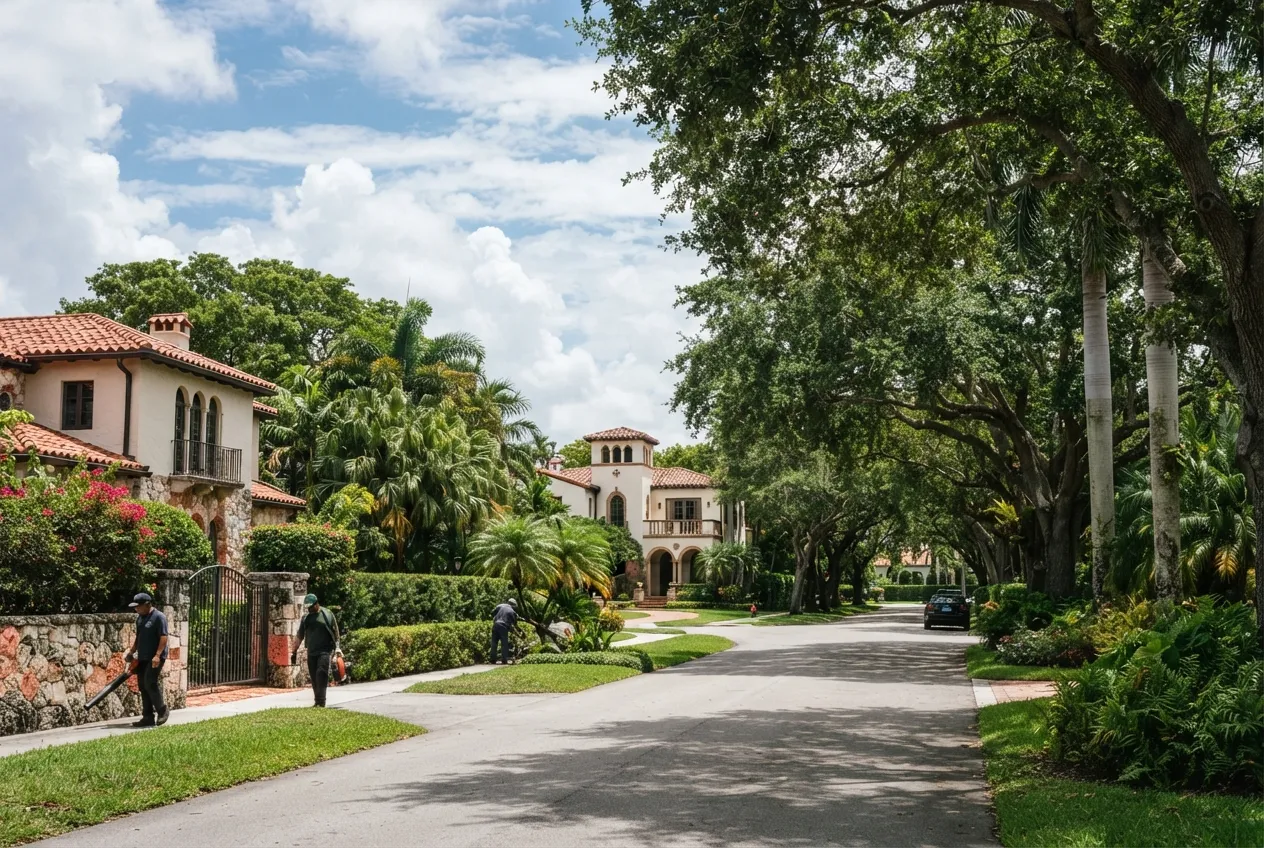
Why a Heat Pump Fits Coral Gables Homes
Coral Gables shares the climate we work in every day. May through October is the wet season, with heavy humidity and frequent afternoon thunderstorms. November through April is sunnier and drier, but air conditioning still runs for most of the year. A heat pump earns its keep in cooling mode, then takes care of the few cool nights without a separate furnace or electric strip heat running as the main source.
Because cooling is the main job, removing moisture matters as much as lowering the temperature. A system that cools the air quickly but leaves it damp feels clammy and can encourage mildew in closets and on walls. We choose equipment and settings with that in mind, not just the temperature on the thermostat.
Sizing the System for Your House
Bigger is not better with a heat pump. An oversized unit cools the house fast, shuts off, and never runs long enough to pull humidity out of the air. An undersized one runs nonstop on hot afternoons and struggles to keep up. We size the system from your home itself rather than copying the label on the old unit.
- Square footage, ceiling height, and room layout
- Window area and which way the main windows face
- Insulation levels in the attic and walls
- Condition and layout of existing ductwork
- How many people live in the home and which rooms get used most
Outdoor Unit Placement and Storm Preparation
The Atlantic hurricane season runs from June 1 to November 30, so we plan the outdoor unit with wind and water in mind. That means a level, raised pad where standing water is a concern, proper tie-downs, and enough clearance around the unit for airflow and future service.
We also look at noise and neighbors. Many Coral Gables lots place equipment close to property lines or patios, so we discuss locations with you before the work starts. If your neighborhood or homeowners association has rules about where equipment can sit or how it must be screened, we plan around those requirements.
Rebates and Tax Credits to Know About
Florida Power & Light runs a Residential HVAC program that offers rebates on qualifying high-efficiency central air conditioners and heat pumps. The rebate is handled through participating contractors at the time of installation, and terms change, so we confirm the current details before we put them in any quote.
On the federal side, the Energy Efficient Home Improvement Credit that covered qualifying heat pumps applied only to systems placed in service before December 31, 2025. It is not available for new installations after that date, so plan your budget without it.
What Installation Day Looks Like
Most replacements follow the same sequence. We protect floors and work areas, recover refrigerant from the old system, and remove the old equipment. Then we set the new outdoor unit, install or match the indoor air handler, connect refrigerant lines and wiring, and check the ductwork connections for leaks.
Before we leave, we run the system in both cooling and heating modes, check airflow and refrigerant charge, and walk you through the thermostat. We also show you where the filter goes and how often to check it, since a clogged filter is one of the most common causes of poor performance in humid weather.
We also serve homeowners in nearby South Miami, West Miami, Miami, Miami Springs, and North Bay Village.