
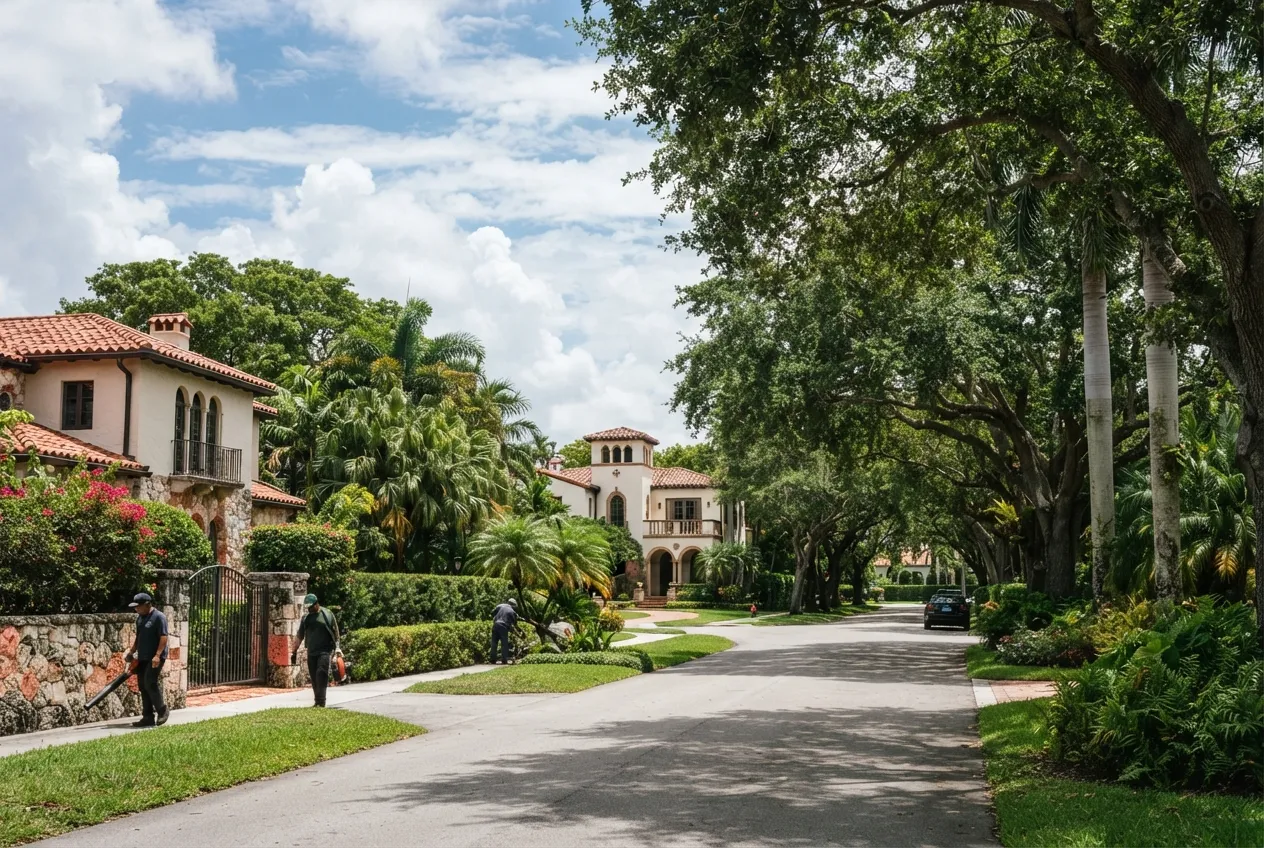
Why AC Systems in Coral Gables Wear the Way They Do
Coral Gables shares the same tropical monsoon climate as Miami Beach. From May through October, the wet season brings high humidity and frequent afternoon thunderstorms. November through April is sunnier and less humid, but most homes still run the AC regularly. That near-constant use means parts like capacitors, contactors, and fan motors cycle on and off many times a day, nearly year-round.
Humidity adds its own load. Your system removes moisture as well as heat, so the condensate drain line carries a steady flow of water during the wet season. When that line clogs with algae or debris, water can back up into the drain pan. It can then trip a safety switch that shuts the system down, or leak onto ceilings and floors.
Storms matter too. The Atlantic hurricane season runs from June 1 to November 30, and summer thunderstorms are common. Power flickers and outages can be hard on compressors and control boards. Wind-driven debris can bend condenser fins or damage the outdoor unit.
Signs Your AC Needs Repair
Call for service if you notice any of the following:
- Air from the vents feels warm or only slightly cool
- The system turns on and off every few minutes
- Water pooling near the indoor unit, or stains on the ceiling below it
- Ice on the refrigerant lines or indoor coil
- Buzzing, grinding, rattling, or repeated clicking from either unit
- Rooms feel sticky even when the thermostat shows the set temperature
- The outdoor unit hums but the fan doesn't spin
- The breaker trips when the AC starts
What Happens During a Repair Visit
The technician starts by asking what you've noticed and when it started. Next, they check the thermostat, breaker, and air filter before moving to the equipment. At the outdoor unit, we test the capacitor, contactor, fan motor, and compressor electrical readings, and inspect the coil for blockage or storm damage. Inside, we check the blower, evaporator coil, drain pan, and condensate line.
If refrigerant is low, that points to a leak. Refrigerant doesn't get used up, so we look for the source instead of just adding more. Before any work starts, you'll get a plain explanation of what's wrong, what the repair involves, and your options, so you can make the call.
If you see ice or the breaker keeps tripping, turn the system off at the thermostat and wait for the technician. Running it in that condition can turn a minor repair into a compressor problem.
Repair or Replace?
Most AC problems can be repaired. Replacement is worth a conversation in three cases: a major part like the compressor or coil fails on an older system, the same issues keep coming back, or the house never feels comfortable even after repairs.
If you move toward replacement, Florida Power & Light's Residential HVAC program offers rebates on qualifying high-efficiency central air conditioners and heat pumps. These rebates are delivered through participating contractors at the time of installation. Program terms can change, so we confirm the current details before quoting them. The federal Energy Efficient Home Improvement Credit (25C) only covered qualifying heat pumps placed in service before December 31, 2025, so it isn't available for new installations.
Keeping Your System Running Between Visits
A few simple habits help prevent the most common breakdowns:
- Check the air filter monthly during the wet season, and replace it when it looks gray or clogged
- Keep plants, fencing, and stored items a couple of feet away from the outdoor unit
- After a storm, look over the outdoor unit for debris or damage before turning the system back on
- Find where your condensate line exits the house, and check that it drips while the system runs
- Keep supply and return vents open and unblocked
Nearby Areas We Serve
In addition to Coral Gables, we provide AC repair in South Miami, West Miami, Miami, Miami Springs, and North Bay Village, all in Miami-Dade County.