
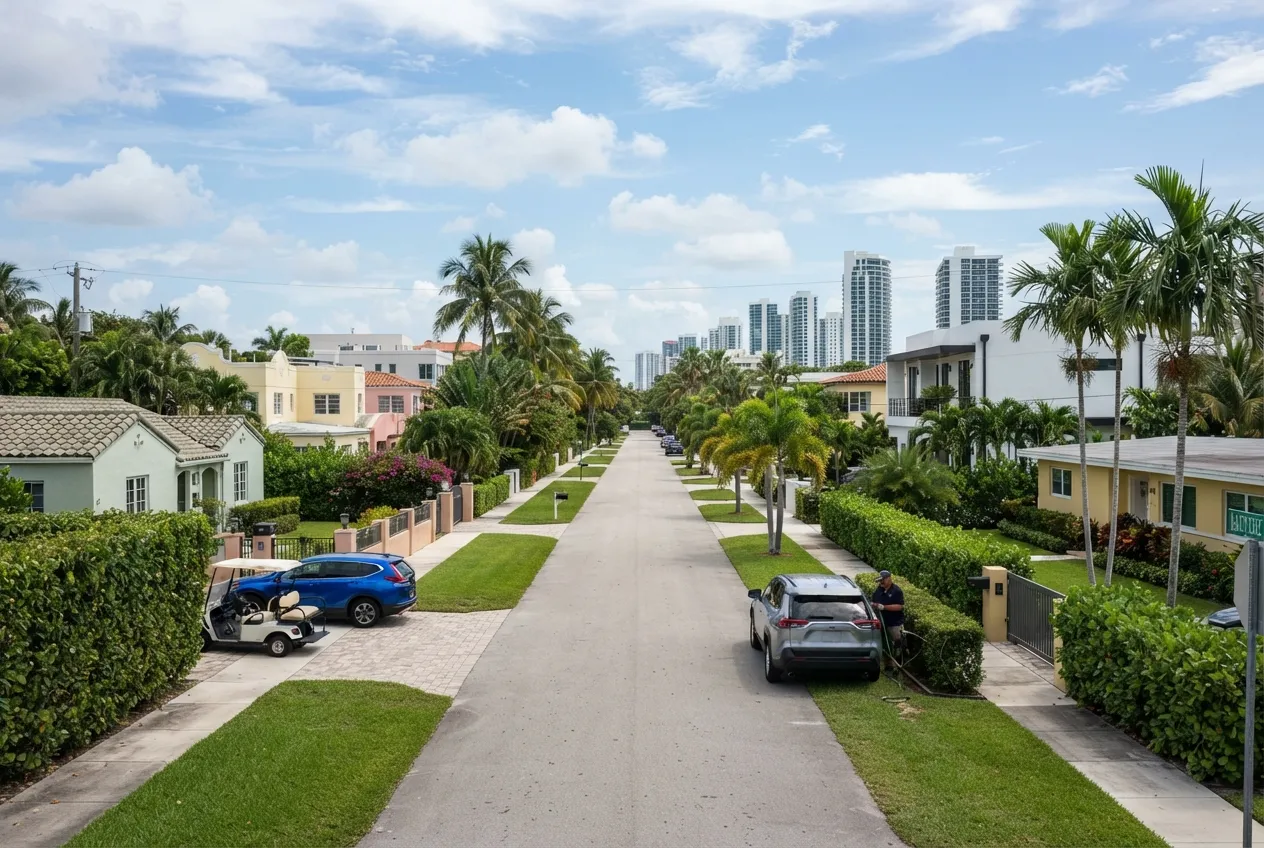
Why a Heat Pump Fits Surfside Homes
Surfside shares the tropical monsoon climate of Miami Beach. From May through October, the wet season brings heavy humidity and frequent afternoon thunderstorms. November through April is sunnier and less humid. Air conditioning runs for most of the year, and the need for heat is brief and mild.
That pattern suits a heat pump well. It works like a central air conditioner most of the year, then reverses to provide heat on the few chilly nights. Because a heat pump moves heat instead of creating it with electric resistance strips, it typically uses less electricity for heating than an older electric furnace. If your home still relies on a strip-heat air handler, switching can make the winter side of your system much more efficient.
How We Size and Plan Your Installation
A heat pump that is too large cools the air quickly but shuts off before it removes enough moisture, which leaves rooms feeling clammy. A heat pump that is too small runs nonstop in August. We perform a load calculation based on your home's square footage, insulation, window area, sun exposure and household size. We do not simply match the size of the old unit. Before installation, we also:
- Check existing ductwork for leaks, sizing problems and condensation damage
- Confirm the electrical panel and circuit can support the new equipment
- Inspect the condensate drain line, which works hard in a humid climate
- Go over thermostat options, including models that help manage indoor humidity
- Choose an outdoor unit location with airflow, service access and flood risk in mind
Set Up for Salt Air and Storm Season
Homes this close to the ocean are exposed to salt air year-round. Salt speeds up corrosion on outdoor coils, fasteners and electrical connections. When we help you choose equipment, we discuss coil coatings and corrosion-resistant options for coastal homes. We also recommend rinsing the outdoor coil with fresh water as part of routine care.
The Atlantic hurricane season runs from June 1 to November 30 and overlaps most of the wet season. We secure the outdoor unit to its pad or stand and consider whether it should sit higher off the ground. We also show you how to shut the system down before a storm and what to check afterward. If your schedule allows, plan a replacement outside the busiest stretch of summer so you are not waiting on equipment when demand peaks.
Rebates and Tax Credits to Know About
Florida Power & Light runs a Residential HVAC program that offers rebates on qualifying high-efficiency central air conditioners and heat pumps. These rebates go through participating contractors at the time of installation, so they must be arranged before the work is done, not afterward. Program terms can change, and we confirm the current requirements before including anything in your quote.
Many homeowners ask about the federal tax credit for heat pumps. The Energy Efficient Home Improvement Credit (25C) covered only qualifying heat pumps placed in service before December 31, 2025. It is not available for new installations after that date, so plan your budget without it.
What Installation Day Looks Like
Replacing an existing central system is often a one-day job, though duct changes or electrical upgrades can add time. We protect your floors, remove the old equipment, set the new indoor and outdoor units, connect refrigerant lines and wiring, and test the system in both cooling and heating modes. Before we leave, we walk you through the thermostat settings, show you where the filter is and explain how often to change it.
We also serve the neighboring communities of Bay Harbor Islands, North Bay Village, North Miami, Sunny Isles Beach and North Miami Beach, so we regularly work in this part of Miami-Dade County.