
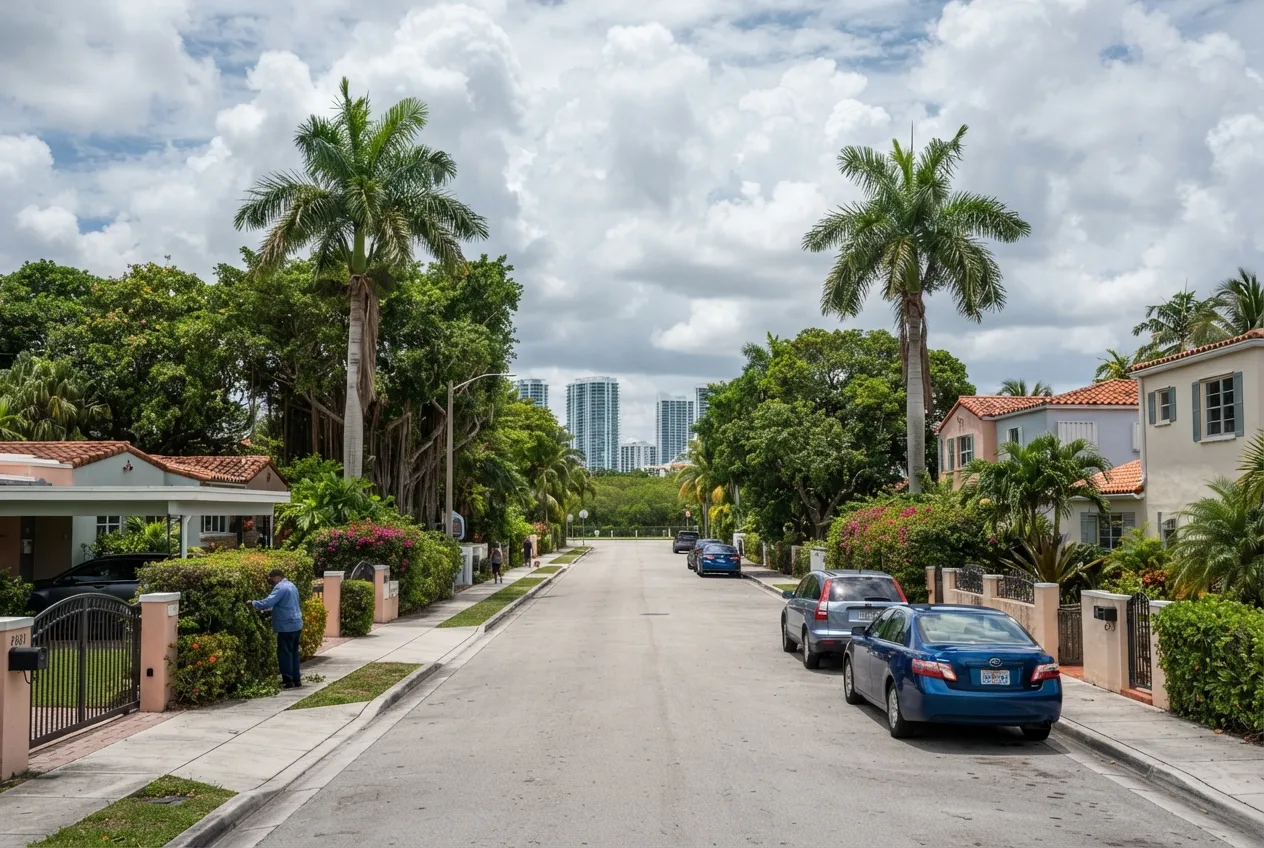
Why AC Systems in North Miami Work So Hard
North Miami shares the tropical monsoon climate of the rest of coastal Miami-Dade County. From May through October, the wet season brings heat, heavy humidity and frequent afternoon thunderstorms. November through April is sunnier and less humid, but most homes still run the air conditioning through much of it. That means your system gets very little downtime, and small problems can become bigger ones without a slow season to catch them.
Humidity is part of the load. An air conditioner doesn't just lower the temperature; it pulls moisture out of the air. When a system is low on refrigerant, has a dirty coil or is short-cycling, the house can feel damp and sticky even when the thermostat reads a reasonable number. That's often the first sign that something needs attention.
Common AC Problems We Repair in North Miami Homes
Most repair calls start with one of a handful of symptoms. Here's what we see most often and what usually causes it:
- Warm or barely cool air from the vents, often from low refrigerant, a failing compressor or a dirty evaporator coil
- Outdoor unit not running, commonly a failed capacitor, contactor or condenser fan motor
- Ice on the refrigerant lines or indoor coil, usually tied to restricted airflow or low refrigerant
- Water around the air handler or in the ceiling, typically a clogged condensate drain line or a full drain pan
- System turning on and off too often, which can point to thermostat issues, electrical faults or an oversized unit
- High humidity indoors even though the AC is running
- Breakers tripping or the system not responding after a storm
Storms, Power Surges and Hurricane Season
The Atlantic hurricane season runs from June 1 to November 30, and North Miami's summer thunderstorms bring lightning and power flickers well beyond named storms. Outages and surges can damage capacitors, control boards and compressors. Wind-driven debris and standing water can also affect outdoor condensers.
If your system won't start after a storm, check the breaker and thermostat first, but avoid repeatedly resetting a breaker that keeps tripping. That's a sign of an electrical problem that should be inspected. We'll test the components, look for storm-related damage, and tell you what needs to be repaired before the system goes back into service.
How a Repair Visit Works
Our technician starts by asking what you've noticed: when the problem started, what the system is doing, and whether anything changed, like a storm or a recent filter swap. From there we check airflow, electrical components, refrigerant pressures, the drain line and the thermostat to find the real source of the problem rather than just the symptom.
Before any work begins, we explain what we found and what the repair involves. If your system is older and facing a major failure, we'll also talk honestly about whether repair or replacement makes more sense for your home, and you make the call.
Repair or Replace: What North Miami Homeowners Should Know
Many problems, such as a bad capacitor, a clogged drain line or a failed fan motor, are straightforward repairs. A failed compressor or a leaking coil on an aging system is a different conversation. If replacement is on the table, Florida Power & Light runs a Residential HVAC program that offers rebates on qualifying high-efficiency central air conditioners and heat pumps through participating contractors at installation. We confirm the current program terms before discussing them with you.
One note on tax credits: the federal Energy Efficient Home Improvement Credit covered qualifying heat pumps placed in service before December 31, 2025. It isn't available for new installations after that date, so it shouldn't factor into a decision today.
Serving North Miami and Nearby Communities
Along with North Miami, we repair air conditioners in North Miami Beach, Bay Harbor Islands, Surfside, North Bay Village and Sunny Isles Beach. If you live in one of these neighboring areas, the same repair process applies.