
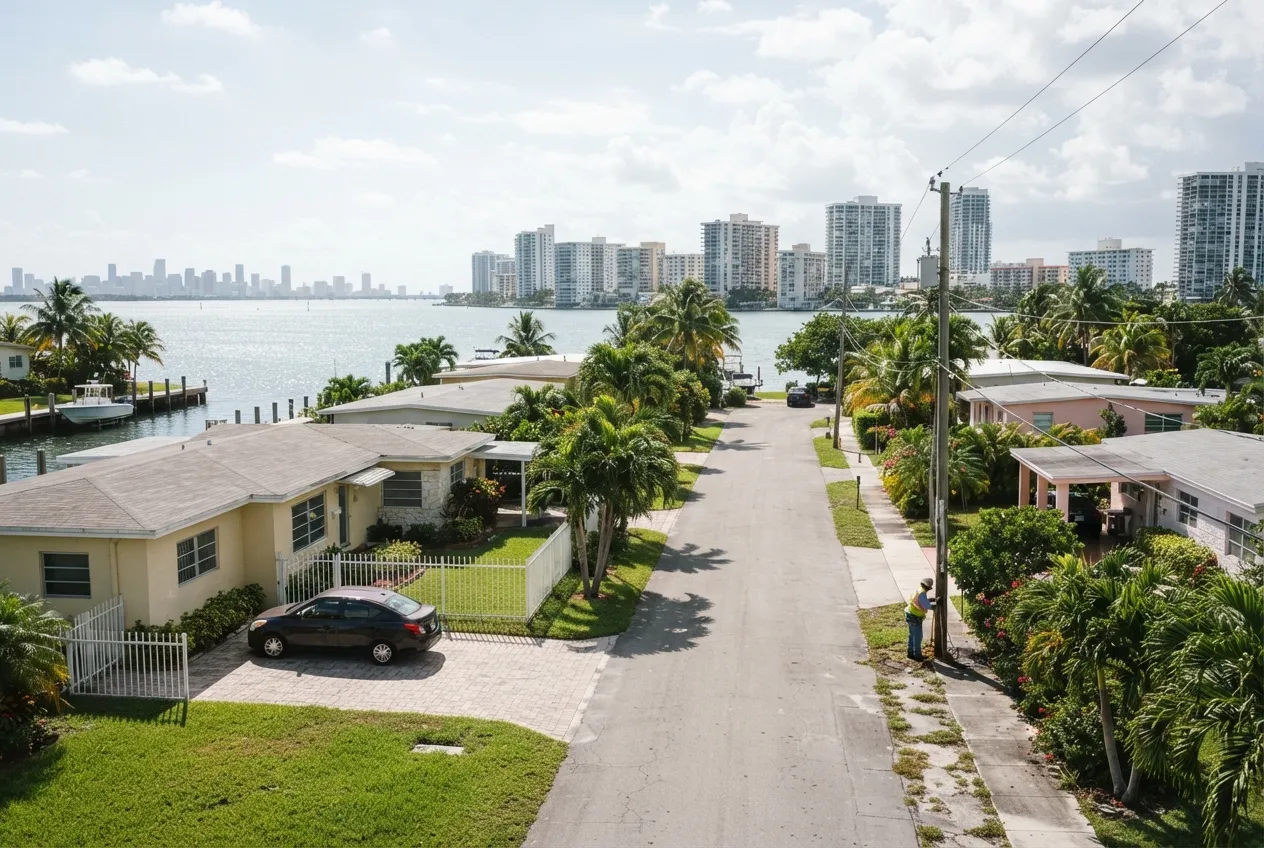
Common AC Problems in North Bay Village Homes
Most repair calls come down to a few causes. The wet season, May through October, brings heavy humidity and frequent afternoon thunderstorms. That puts extra strain on coils, drain lines, and electrical parts. Homes close to the water also deal with salt air, which can wear down outdoor condenser coils and electrical connections over time.
These are the symptoms we see most often and what usually causes them:
- Warm air from the vents: a failed capacitor, a condenser fan that has stopped, low refrigerant from a leak, or a frozen evaporator coil
- Water leaking indoors: a clogged condensate drain line, or a drain pan that is full or cracked
- System runs without shutting off: dirty coils, a clogged air filter, or a unit struggling against high humidity
- Breaker trips or the unit won't start: an electrical fault, a worn contactor, or a compressor that has trouble starting
- Musty smell or a damp feel indoors: drainage problems, or a system that short-cycles and doesn't run long enough to pull moisture out of the air
What Happens During a Repair Visit
Our technician starts by asking what you've noticed and when it began. Then they check the basics: the thermostat settings, the air filter, and the breaker. Next they inspect the indoor air handler and the outdoor condenser. They take electrical readings, check refrigerant pressures, test the capacitor and contactor, and confirm that the condensate drain is flowing. Before doing any repair, we explain what we found, what needs to be fixed, and what your options are, so you make the decision.
Many homes in North Bay Village are condos or units in multi-story buildings. In these buildings, AC equipment may sit in a closet, on a balcony, or on the roof. If your building has rules about service visits, elevator reservations, or contractor parking, please tell us when you book. That way the technician can get to your equipment without delays.
Storms, Power Outages, and Your AC
Hurricane season runs from June 1 to November 30, and summer thunderstorms are common even in quiet years. Power outages and surges can damage capacitors, control boards, and contactors. Sometimes a system won't restart properly after the power comes back.
Before you call, a few safe checks can help:
- Check whether the AC breaker has tripped, and reset it only once
- After power returns, wait several minutes before turning the system back on
- Clear branches and debris away from the outdoor unit
- Don't run the system if the outdoor unit was flooded or visibly damaged. Have it inspected first.
Repair or Replace?
A repair is usually the right call when the problem is a single part and the rest of the system is in good shape. Replacement deserves a look if the compressor has failed, the indoor coil is leaking refrigerant, or the system keeps breaking down while it struggles to cool your home. We'll give you a straight assessment either way.
If replacement makes sense, Florida Power & Light runs a Residential HVAC program that offers rebates on qualifying high-efficiency central air conditioners and heat pumps. These rebates are delivered through participating contractors at the time of installation, and we confirm the current program terms before quoting them. Note that the federal Energy Efficient Home Improvement Credit for heat pumps only covered systems placed in service before December 31, 2025, so it is not available for new installations.
Keeping Your AC Running Between Repairs
A little routine care prevents many common repair calls, especially in a humid coastal area:
- Check your air filter monthly during the wet season and replace it when it looks dirty
- Keep the condensate drain line clear, and watch the drain pan for standing water
- Keep at least a couple of feet of open space around the outdoor unit
- Gently rinse salt and grime off the outdoor coil with a garden hose, never a pressure washer
- Schedule maintenance during the drier months, November through April, before heavy use starts again