
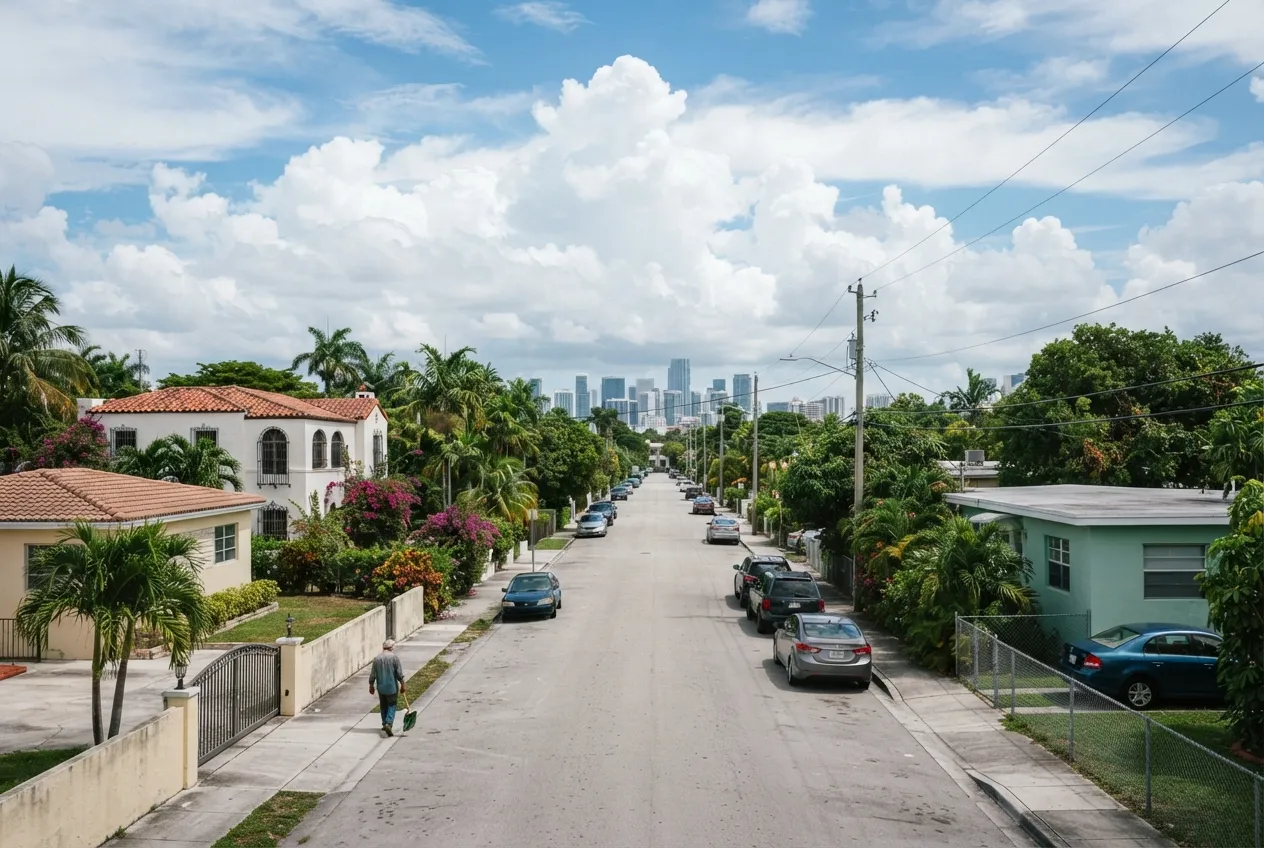
Why Sweetwater AC Systems Work So Hard
The Miami area has a tropical monsoon climate. From May through October, the wet season brings high humidity and frequent afternoon thunderstorms. November through April is sunnier and less humid, but it is rarely cool enough to give an air conditioner a real break. In practice, most Sweetwater homes run their AC for most of the year.
That long runtime causes predictable problems. Coils collect dirt faster, condensate drain lines clog with algae, capacitors and contactors wear out, and small refrigerant leaks become obvious when the system can't keep up in August. Humidity matters as much as temperature. A system that cools the air but doesn't pull enough moisture out of it can leave a house feeling clammy even at a reasonable thermostat setting.
HVAC Services We Offer in Sweetwater
We handle repair, replacement, and routine upkeep for the main types of residential systems in the area. If a repair is worth doing, we'll tell you. If the system is near the end of its life and repairs no longer make sense, we'll explain why and walk you through replacement options.
- AC repair for central systems that won't cool, short-cycle, leak water, or make new noises
- AC installation when your current system is worn out or undersized for the house
- Heat pump installation, a common choice in South Florida because one unit handles cooling and occasional heating
- Ductless mini-split installation for additions, converted garages, and rooms the central system doesn't reach well
- Heating repair, furnace repair, and furnace installation for homes that rely on them during cooler stretches
- HVAC maintenance to clean coils, clear drain lines, check electrical parts, and catch problems early
- Duct cleaning and indoor air quality work, including filtration and humidity control
Hurricane Season and Your HVAC System
The Atlantic hurricane season runs from June 1 to November 30, which overlaps almost entirely with the wet season. High winds, flying debris, standing water, and unstable power are all hard on outdoor condensers and electrical components.
A few simple steps help. Secure loose items near the outdoor unit before a storm, and turn the system off at the thermostat if the power is flickering. After a storm, look for debris, standing water, or visible damage before switching it back on. If the unit was flooded or struck by debris, have it checked before running it. We can inspect the condenser, wiring, and drain system and tell you whether it is safe to operate.
Rebates and Tax Credits to Know About
If you are replacing a central air conditioner or heat pump, Florida Power & Light runs a Residential HVAC program that offers rebates on qualifying high-efficiency equipment. These rebates are delivered through participating contractors at the time of installation. Program terms can change, so we confirm the current terms before including them in any quote.
One change worth knowing: the federal Energy Efficient Home Improvement Credit (25C) only covered qualifying heat pumps placed in service before December 31, 2025. It is not available for new installations after that date, so it should not factor into a replacement decision today.
Serving Sweetwater and Nearby Communities
Sweetwater sits in western Miami-Dade County, and we also work in neighboring areas including West Miami, Miami Springs, South Miami, Coral Gables, and Miami. If you own or manage homes in more than one of these communities, the same team can handle service at each.
When you contact us, describe what the system is doing: no cooling, weak airflow, water around the indoor unit, unusual sounds, ice on the lines, or rising humidity indoors. Mention the age of the system if you know it. Those details help us arrive prepared with the right parts and spend less time guessing.