
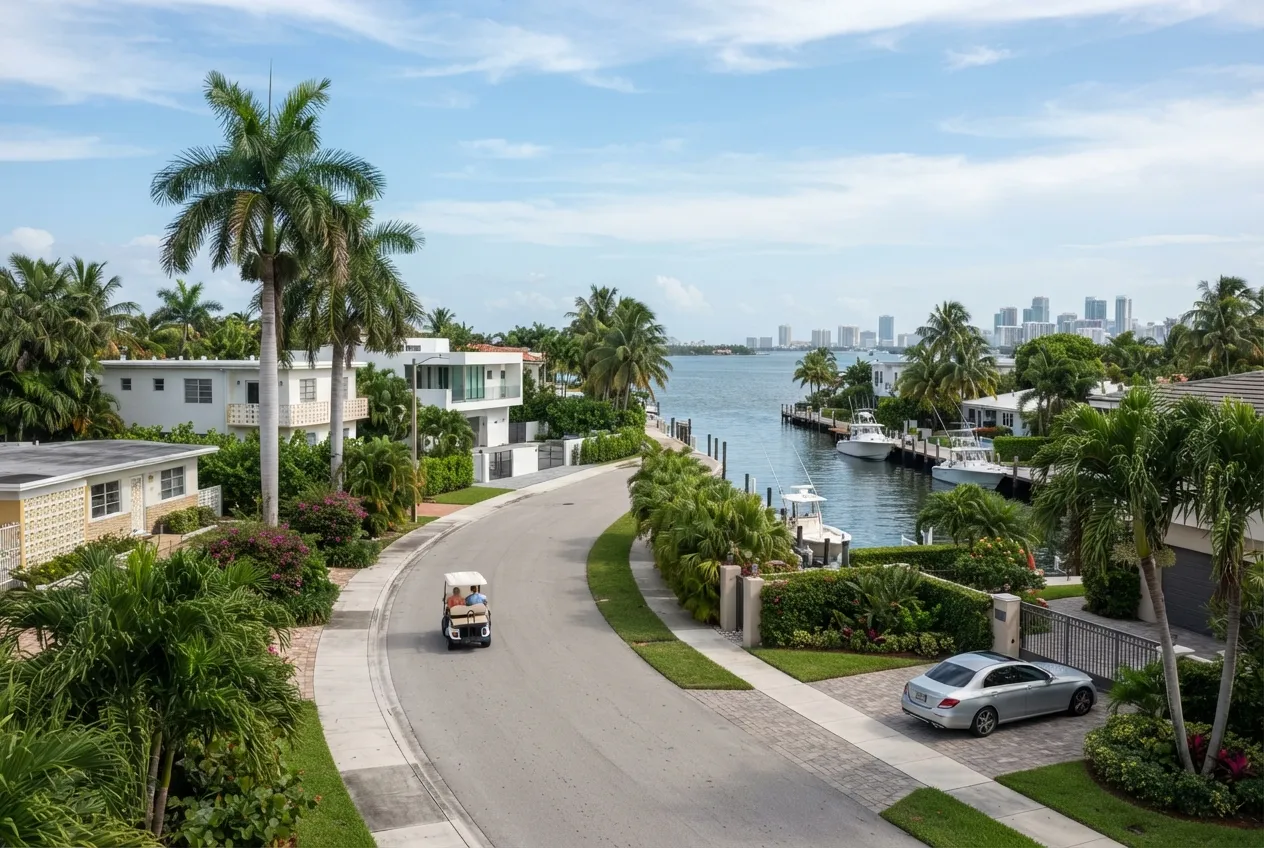
Why AC Systems in Bay Harbor Islands Work So Hard
Bay Harbor Islands has a tropical monsoon climate. From May through October, the wet season brings high humidity and frequent afternoon thunderstorms. November through April is sunnier and less humid, but most homes still run the AC. That means your system gets very little downtime, and small problems tend to grow instead of waiting until spring.
Humidity is a big part of the load. Your air conditioner doesn't just cool the air. It also pulls moisture out of it. When a system is low on refrigerant, has a dirty coil, or is the wrong size for the home, the house can feel damp and clammy even when the thermostat says it's cool. In a waterfront town, salty air also wears on outdoor units. It can corrode coil fins, electrical connections, and fasteners over time.
Common AC Problems We Repair
Most service calls start with one of a handful of symptoms. Each one can have several possible causes, so we test before we replace parts.
- Warm or barely cool air: often a failed capacitor, a contactor problem, a refrigerant leak, or a dirty condenser coil.
- Water around the indoor unit: usually a clogged condensate drain line or pan. These lines clog easily during the humid months.
- Ice on the refrigerant lines or indoor coil: restricted airflow from a dirty filter or blower issue, or low refrigerant.
- The system won't turn on: tripped breakers, a blown fuse, a float switch shut off by a backed-up drain, or thermostat wiring problems.
- Short cycling: the unit turns on and off in short bursts, which can point to electrical, refrigerant, or sizing problems.
- Unusual noises: buzzing, grinding, or rattling from motors, fans, or loose panels.
- Problems after a storm: power surges and wind-blown debris can damage outdoor components and control boards.
What Happens During a Repair Visit
We start by asking what you've noticed, including when the problem started and whether it comes and goes. Then we check the thermostat, the indoor air handler, the drain system, the outdoor condenser, and the electrical components. If refrigerant is a possible cause, we measure system pressures and temperatures instead of guessing.
Once we find the cause, we explain what failed and why, and we lay out your options before any work begins. Many common repairs can be done the same visit, such as replacing a capacitor, clearing a drain line, or cleaning a coil. If a part has to be ordered, we tell you what to expect in the meantime and how to run the system safely until it's fixed.
Storm Season and Your Air Conditioner
The Atlantic hurricane season runs from June 1 to November 30, which overlaps with the hottest, most humid part of the year. After a storm or power outage, check the outdoor unit for debris before you turn the system back on. If you smell burning, hear loud electrical buzzing, or the breaker keeps tripping, shut the system off and call for service. Running a damaged unit can turn a smaller repair into a much larger one.
Repair or Replace?
Not every failure means you need a new system. We look at the age and overall condition of the equipment, how often it has needed repairs, whether it uses an older refrigerant, and how well it handles humidity in your home. If a repair is the reasonable choice, we'll say so.
If replacement makes more sense, Florida Power & Light runs a Residential HVAC program that offers rebates on qualifying high-efficiency central air conditioners and heat pumps through participating contractors at installation. We confirm the current program terms before we include anything in a quote. The federal Energy Efficient Home Improvement Credit (25C) only applied to qualifying heat pumps placed in service before December 31, 2025, so it does not apply to new installations now.